
12 Customs Compliance Best Practices to Avoid Penalties in 2026
Global trade regulations are getting more restrictive, and customs authorities are tightening up. In 2026, your company can’t afford to let compliance become an afterthought.
If your business is involved in international trade, duty drawback can be a game-changer. Duty drawback is a government program that refunds certain duties, taxes, and fees paid on imported goods that are subsequently exported or destroyed. Your business can recover significant amounts that go right back to the bottom line. Before you can do that, though, you have to decide whether to manage duty drawback internally or outsource it to seasoned specialists.
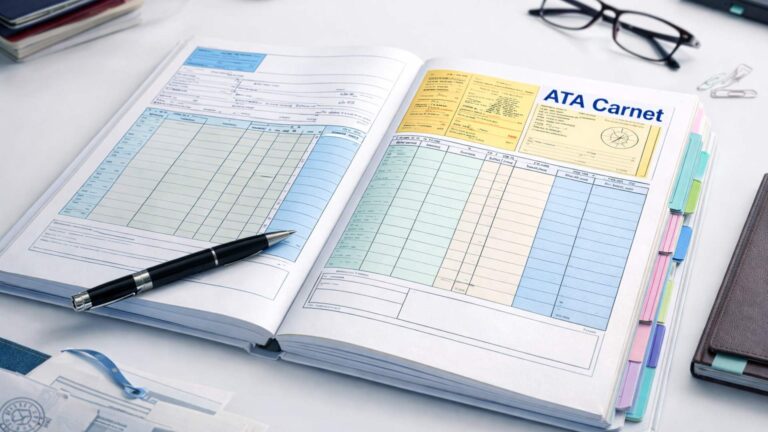
Paying import duties and taxes can add unnecessary burdens on you or your company. Importing items can also hold up your merchandise in port. However, if you’re a company that sends certain goods internationally, you could reduce the costs of import duties if the item will be in a foreign country for less than a year.
U.S. import regulations are notoriously complex, particularly when they involve chemical substances. If your business imports chemicals (or products that contain them), one of the most daunting regulations is the Toxic Substances Control Act (TSCA). Noncompliance with TSCA can lead to significant financial penalties, costly shipment delays — and irreparable damage to your company’s reputation.
Navigating customs and logistics is complex and costly, but a partner with the right expertise changes everything. An experienced partner lowers risks, maximizes refunds, and keeps your cargo moving seamlessly. Don’t leave compliance or cash flow to chance.
HST classification guidelines are becoming increasingly important. With stricter customer enforcement, frequent trade and regulatory updates, evolving global trade policies, and the rise of AI-powered auditing systems, accurate classification is essential.
If global trade were a jigsaw puzzle with pieces including contract negotiating, navigating customs, and shipping logistics, Incoterms 2020 would be the instructions on the puzzle box.
If you ship goods internationally, chances are you’ve heard the terms customs broker and freight forwarder.
If you’ve paid duties on goods imported into the United States that were later exported, you’ll want to get as much of that…
On December 19, 2022, the final rules under 19 CFR part III came into effect. The two rules are titled Modernization of the…
The imposition of several different tariffs across lists of products spanning nearly every category of product over the last several years has meant that a keen eye towards Customs compliance remains a critical part of any supply chain. A Customs broker that understands and can adapt to the rapid pace of change and can apply that to any business is crucial now more than ever for achieving success.
There are a lot of moving parts when it comes to getting any shipment in or out of the United States. The logistics of moving products from overseas and safely delivered at a client’s doorstep involves the coordination of many parties and carriers to handle the goods, but the step of choosing the right Customs broker is absolutely critical.
JM Rodgers has been hard at work for the last few months remotely, with all of our staff able to work safely sheltered at home. In this time we have been able to maintain a healthy and well-provided-for workforce, still able to offer the same level of service and attention to our clients.
If you’ve got your feet wet importing goods from overseas then your company will no doubt have become familiar with the concept of…
There is no aspect more central to the good operation of a Customs brokerage firm than being diligent with compliance. Making sure that…
By Jim Roberts, VP of Compliance EAPA is the Enforce and Protect Act, is Title IV, Section 421 of the Trade Facilitation and…