Glossary Terms

  • Detention

    Detention is a fee for situations when a shipping container has been removed from a vessel, taken from the port to a destination such as a warehouse, unloaded, but not returned (either to the port or an empty container depot) within a certain amount of time. The term “detention” is also used when an empty…
  • Direct Identification Drawback

    Direct Identification Drawback is a type of duty drawback that allows importers and manufacturers to apply for a rebate of up to 99% of import duties, taxes, and fees on imported merchandise and components that are then exported for sale without being used domestically. What sets Direct Identification Drawback aside from other types of duty…

  • Drayage

    Drayage refers to the transportation of a container from an ocean port to a subsequent destination in the supply chain. This is also often referred to as “the first mile” and usually involves a short-distance trip to a nearby warehouse.  Drayage generally involves transporting a container by truck, while intermodal drayage may involve truck, sea,…

  • Duty

    A duty is an indirect tax applied to imports and exports based on the value of the product being shipped. Duties applied to imported products are called import or customs duties, while duties applied to locally produced exports are called export duties. When calculating duty tax, U.S. Customs and Border Protection will consider the value…

  • Duty Drawback

    Duty Drawback, also called Drawback, is a refund of the shipper’s paid customs duties, fees, and certain taxes. The refund is made by U.S. Customs and Border Protection (CBP) in cases where duty-paid import cargo is subsequently exported or destroyed. To receive duty drawback on a shipment, shippers must lodge a claim within 5 years…

  • Forty-Foot Equivalent Unit

    A Forty-foot Equivalent Unit (FEU) is a shipping container with internal dimensions of about 40 feet long, 8 feet wide, and 8 feet tall. One FEU can hold between 20 and 24 pallets, depending on whether the pallets are standard or EUR pallets. While the FEU is a standard in the United States, the Twenty-foot…

  • Freight Forwarder

    A freight forwarder is a logistics professional or company that acts as an agent on behalf of a shipper to arrange and coordinate the transportation of goods. Freight forwarders do not typically move cargo themselves. Instead, they organize shipments with carriers and manage the documentation, compliance, and operational requirements associated with domestic and international transport….

  • Freight Forwarding

    Freight forwarding is a logistics service in which a freight forwarder acts as the shipper’s agent to coordinate and manage the transportation of goods from origin to final destination. Rather than physically transporting cargo, the freight forwarder arranges movement with carriers and oversees the operational, regulatory, and documentation requirements associated with the shipment. In this…

  • Freight Management

    Freight Management is the strategic coordination and oversight of a company’s transportation activities across its supply chain. It encompasses planning, execution, monitoring, and optimization of freight movement to control costs, improve service levels, and maintain regulatory compliance. Freight management goes beyond booking individual shipments. It involves analyzing transportation modes, carrier performance, routing strategies, transit times,…

  • Full Container Load

    A Full Container Load (FCL) shipment refers to when a single person’s import or export shipment fills an entire shipping container. This means the supplier can completely fill a container, have it taken directly to a shipping yard, and send it to its destination. A Less Than Container Load (LCL) shipment, for example, is combined…

  • Harmonized Tariff Schedule

    The Harmonized Tariff Schedule (HTS) of the United States sets out and regulates all tariff rates and statistical categories for imported merchandise and is published by the US International Trade Commission (ITC). Based on the International Harmonized System used worldwide by members of the World Customs Organization (WCO), the HTS uses HS (Harmonized Commodity Description…

  • Importer of Record

    The Importer of Record (IOR) is the person responsible for handling all supporting Customs documentation and payments on an import into the US.  This person is responsible for ensuring that all imported cargo meets all legal and Customs requirements. The importer of record can be the owner of the goods, but another party may also…

  • Incoterms®

    Incoterms® (short for International Commercial Terms) are terms of agreement between the seller and buyer regarding who is responsible for payments, insurance, customs clearance, and handling goods throughout the freight process. Incoterms® are defined and revised by the International Chamber of Commerce (ICC), setting internationally recognized rules for sellers and buyers in export transactions.  Incoterms®2020…

  • Last Free Day

    Last Free Day (LFD) is the last day of free storage offered by a terminal before demurrage or per diem fees are applied to a shipment. If a shipper wants to avoid these fees, it is crucial to ensure that shipments are picked up before the last free day. The allotted free storage time for…

  • Less Than Container Load

    Less Than Container Load (LCL) is one of two ocean transport services available for shippers, the other being Full Container Load (FCL). LCL services are better for anyone who does not have enough cargo to fill an entire container, as smaller shipments can be consolidated into a single container, with each shipper paying only for…

  • Less Than Truckload

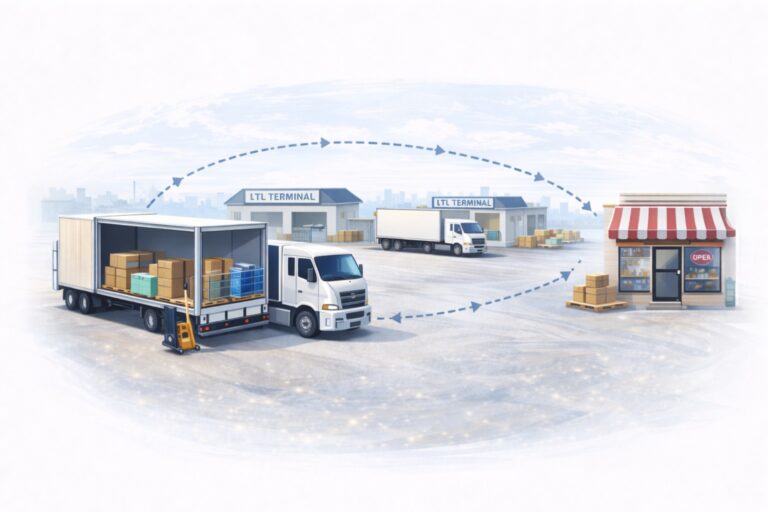
    A Less Than Truckload (LTL) service, also known as LTL shipping, is a trucking option for shipments that are smaller than an entire truckload. An LTL shipment is combined with other LTL shipments to fill a truck, with each shipper paying only for the space used rather than the entire truck. Compared with Full Truckload…

  • Licensed Customs Broker

    A Licensed Customs Broker is an individual who has been granted a license by U.S. Customs and Border Protection to conduct customs business on behalf of importers and exporters. Licensing is governed by 19 CFR Part 111 and requires passing the Customs Broker License Examination, meeting eligibility standards, and undergoing a background review conducted by…

  • Manufacturing Drawback 

    Manufacturing Drawback is a type of duty drawback, a rebate that manufacturers can apply for to recoup up to 99% of the duties and fees paid on imported raw materials and components that have been used in the manufacture of export products.  What Is the Purpose of Manufacturing Drawback?  The purpose of the Manufacturing Drawback…

  • Non-Vessel Operating Common Carrier

    A Non-Vessel Operating Common Carrier (NVOCC) fulfills all of the functions of a Vessel Operating Common Carrier (VOCC) regarding cargo transportation, essentially, except that NVOCCs do not own their own vessels like typical carriers. Instead, an NVOCC will lease space on another carrier’s vessel, which it then sells to its customers under its own House…

  • Notice of Intent to Export, Destroy, or Return Merchandise for Purposes of Drawback

    A Notice of Intent to Export, Destroy, or Return Merchandise for Purposes of Drawback (CBP Form 7553) is a key step in the process of claiming the Rejected Merchandise Drawback. This form must be submitted to Customs and Border Protection (CBP) to allow CBP to examine a rejected duty-paid import and determine if it warrants…

  • Notify Party

    A notify party is the party who receives the shipment information from a carrier when cargo arrives at its destination.  This person is designated on a bill of lading, sea waybill, or air waybill, so they can receive the shipment information. The notify party can be the shipper, consignee, a customs broker, or any other party involved in the…

  • Original Bill of Lading

    An Original Bill of Lading (OBL) is a shipping document that acts as the contract of carriage, the title of the cargo, and the shipment receipt from the carrier. When an OBL is issued, three identical original bill of lading forms are issued simultaneously, one each for the carrier, consignee, and shipper. For the consignee…

  • Per Diem Charge 

    A per diem charge, also referred to as detention, is a fee applied by a carrier or container leasing company when a shipping container is returned late.  Per diem means “by the day” in Latin, and a per diem charge is a late return fee that accumulates for each day a container is not returned…